If former National Commission for Museums and Monuments (NCMM) director Abba Isa Tijani’s tenure is likely to be remembered for the restitution momentum he helped nurture, including Germany’s 2022 transfer agreement of more than 1,000 Benin Bronzes to Nigeria, the return of over 30 Benin objects from US museums, and restitutions by UK institutions such as the University of Cambridge and the University of Aberdeen, then current director Olugbile Holloway appears poised to define his own legacy through the institutional consolidation of these gains. This includes the development of the NCMM’s Oba Ovonramwen storage facility in Benin City, the launch of the Digital Museum Project (museum.ng), further restitutions from Europe, including 119 Benin Bronzes from the Netherlands, 14 artefacts from Switzerland, 116 artefacts from the University of Cambridge, and, most recently, the renovation of the main exhibition hall of the National Museum, Onikan, alongside parts of its surrounding environment.
Amidst these achievements, one must also contend with the puzzling introduction, in 2024, of Ben Enwonwu’s 1959 full-length sculpture of Queen Elizabeth II into the courtyard of Nigeria’s National Museum, more than six decades after independence.
Before its renovation, the National Museum, Onikan, like many of the more than fifty national museums scattered across the country, had curatorial narratives and historical displays so outdated that, during several of my visits, even staff members could not clearly recall when many sections were last revised.
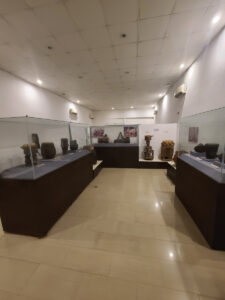
So, when the Onikan Museum, headquarters of the National Commission for Museums and Monuments (NCMM), shed its dimly lit exhibition halls, faded pastel plywood panels, and smudged glass vitrines that had long failed to convincingly present Nigeria’s civil and artistic traditions in favour of a newer, ostensibly shinier display, the transformation was striking.
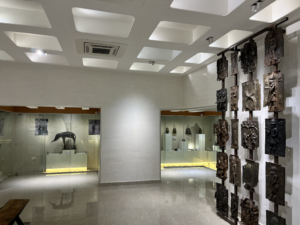
Cold tiled floors, floor-to-ceiling vitrines, and pop ceilings fitted with grid lighting panels now illuminate the halls within an open-navigation spatial design. A generous reading might suggest that light has finally been cast upon our ancestors, and that Nigeria may at last begin to heed the warning implicit in Ben Enwonwu’s 1948 lament: “Woe to that nation whose past has been left to decay.”
The renewed attention the museum will inevitably attract presents an important opportunity to celebrate its infrastructural revival while also interrogating the deeper structural conditions that have long shaped Nigeria’s public museum sphere, and to question whether some of these same problems have quietly seeped into current renewal efforts.
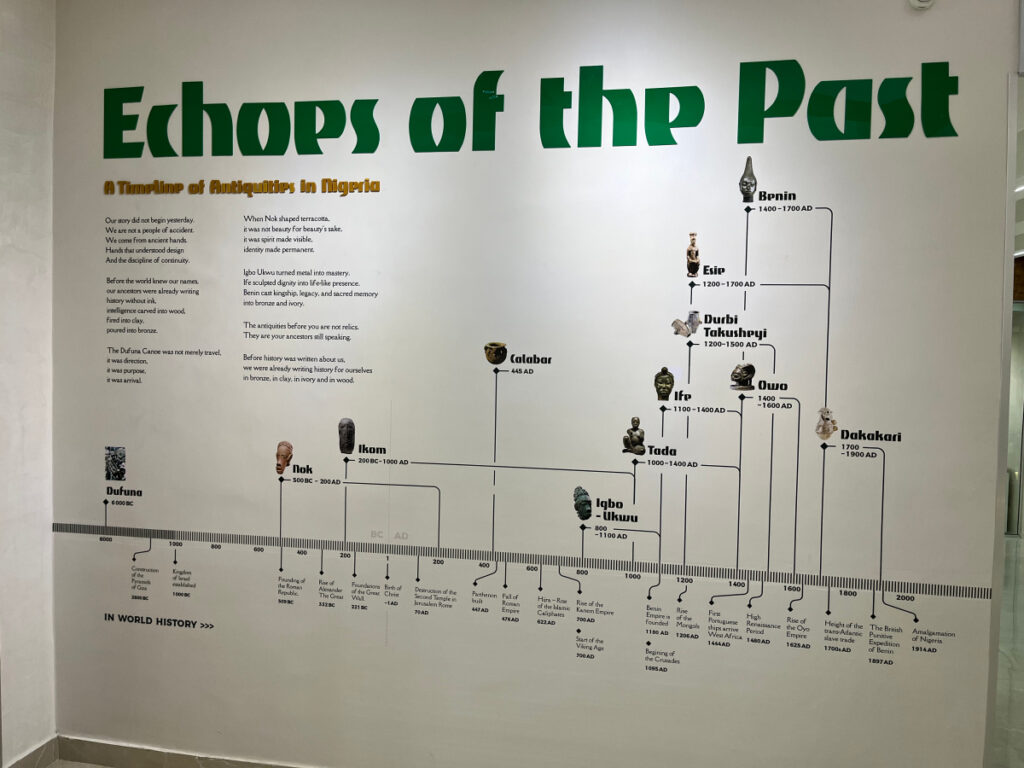
In a positive step, the new display, titled Echoes of the Past, expands the former curation and timeline to include the histories and artistic traditions of peoples and places previously absent from the museum’s national narrative, particularly the ancient burial culture and trans-Saharan significance of Durbi Takusheyi in Katsina, as well as the early settlement and material heritage of Dakarari in Kebbi State. Artefacts from these sites, many of which have not been publicly displayed before, now enter broader public view.
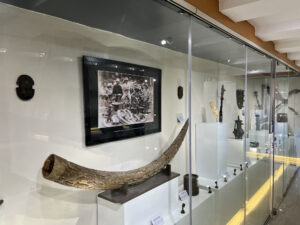
While most objects remain housed behind vitrines, a few pieces, such as Yoruba house posts, Benin bronze plaques, and Benin ivory tusk carvings, are allowed to breathe openly, much as they may have been encountered centuries ago. A sign reading “Living Heritage, Please Touch Gently” marks a welcome departure from the rigid colonial museum model of “Do Not Touch.” During my visit, I anxiously anticipated being stopped from taking photographs, but that anxiety proved unnecessary.
As has become customary in narrating Nigeria’s artefact history, the exhibition begins with Nok terracotta sculptures dating as far back as 500 BCE. Elsewhere, however, the timeline acknowledges the 6,000-year-old Dufuna Canoe as predating them. It remains unfortunate that the Dufuna Canoe, the second oldest known canoe in the world, located in Damaturu, Yobe State, still cannot be adequately preserved by the NCMM.
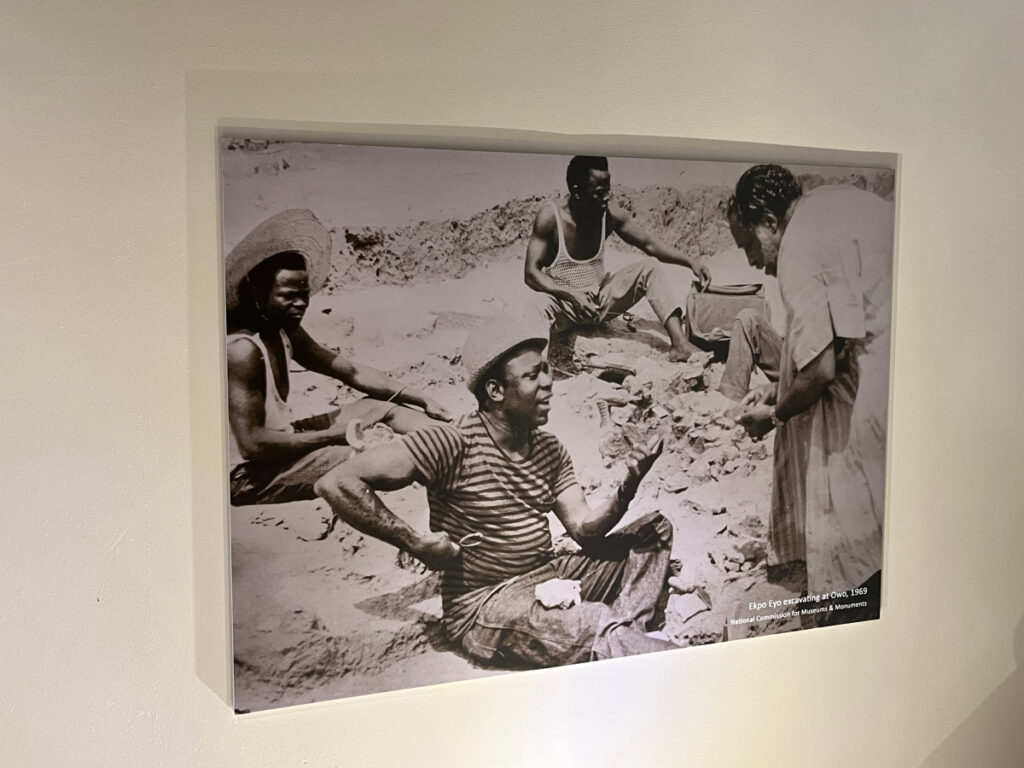
The new curation also leans into stronger visual storytelling, incorporating photographs into the displays, including images of the 1959 Igbo-Ukwu excavation team and a nostalgic photograph of the highly influential former NCMM director Ekpo Eyo and his team excavating in Owo in 1969.
The artistic traditions of Igbo-Ukwu, Ikom, Esie, Tada, Calabar, Ife, and Owo are each afforded prominent sections before visitors arrive at the largest portion of the exhibition: Benin. Particularly striking are two hanging ivory tusks intricately carved with elaborately dressed royal figures. Nearby stand the Benin bronze plaques, similarly depicting personalities from the royal court.
Beside the Benin section, a provocative sign asks: “British Museum How Far?” This open-ended jab references the institution’s continued refusal to return the Benin Bronzes, alongside many other artefacts with deeply troubling histories of violent removal that remain in its care despite shifting global attitudes toward restitution. Arguments by figures such as Mary Beard, who advocate moving quickly beyond questions of ownership in favour of retaining such works in “international museums,” where “the world” may continue to see them, remain deeply fraught. Who exactly constitutes “the world,” and who remains excluded? While elites from origin nations may possess the resources to travel and view these works abroad, what of the millions whose ancestors created them but cannot access them?
Equally revealing are the stories still absent from Onikan’s attempt to construct an encompassing Nigerian narrative. Nigeria is home to more than 250 ethnic and cultural groups; no single museum can reasonably tell all these histories at once. Yet this limitation underscores the need for the National Museum not to function as a static institution whose displays change only once in decades. Rather, it must increasingly embrace dynamic programming, rotating exhibitions, and contemporary media to continuously narrate the multiplicity of Nigerian histories.
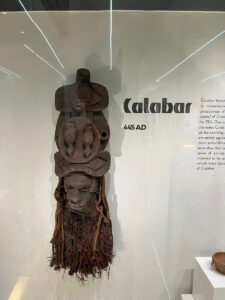
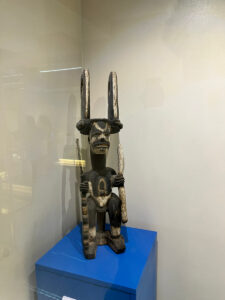
During my visits, while many guests appeared animated by the discovery of newly displayed artefacts and narratives, others remained visibly tense, even fearful, when confronted with certain spiritual objects in their original forms. This reaction perhaps reflects what scholars Abba A. Abba and Chibuzo Onunkwo describe as the longstanding misrepresentation, demonisation, and marginalisation of African spiritual traditions under colonial and missionary ideologies.
Beyond restitution advocacy and conservation, the NCMM’s evolving mandate must now also include activation: collaborating with contemporary practitioners, artists, and researchers capable of reclaiming, contextualising, recontextualising, and extending the meanings of these artefacts beyond static display and descriptive labels.
For visitors drawn to the recently popular J. Randle Centre for Yoruba Culture and History in Onikan, there is now the added incentive of encountering a broader spectrum of Nigerian spiritual traditions, historical art, and cultural narratives at the newly renovated National Museum just across from it.