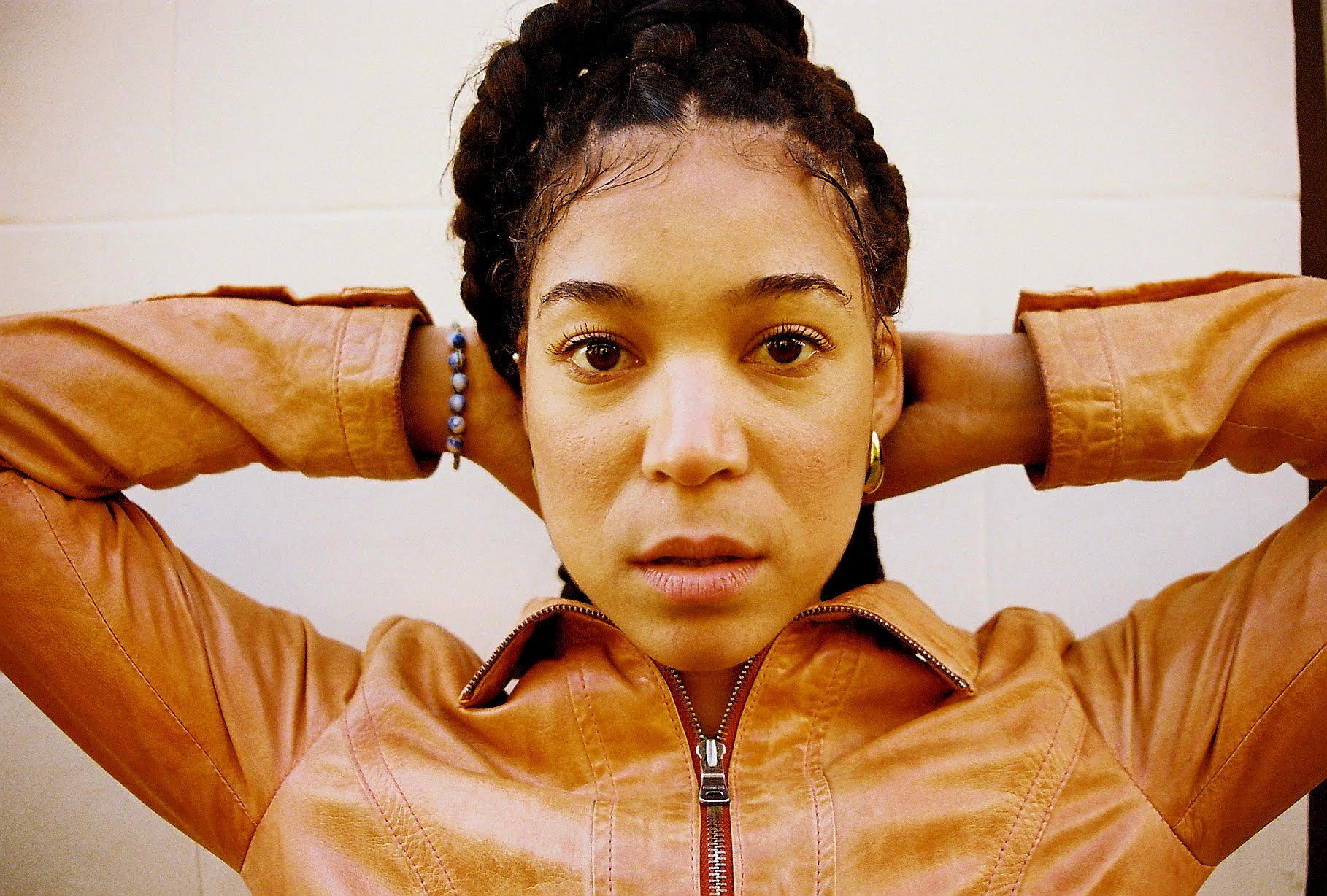
What project were you investigating or developing during your residency?
I came to Lagos where I had the chance to be welcomed by Angels and Muse, a wonderful artist residency, to research the influence of Christianization on precolonial Igbo traditional culture. My goal was to write one or more film scripts addressing this topic in an indirect way, and more broadly to contribute to the visibility of traditional Igbo culture and precolonial African cultures, as I am Igbo Nigerian through my biological father.
How did your time at this residency shift, expand, or challenge your practice?
I was aware that I carried the white gaze before coming to the residency: I grew up in the West and did not have access to my Nigerian culture while growing up. But for one of the first times in my life, I experienced my skin color and my body in public space being read as privilege in an obvious way. Even though this can lead to fetishization, I quickly had to accept being perceived as white here, despite all the identity pain that brings, rather than resist it. I think that when you hold privilege, you sometimes have to keep your frustrations to yourself. I also realized that I was, like Europe, very self-centered. This made me question how I should approach my fictional subject, and I had to become more humble.
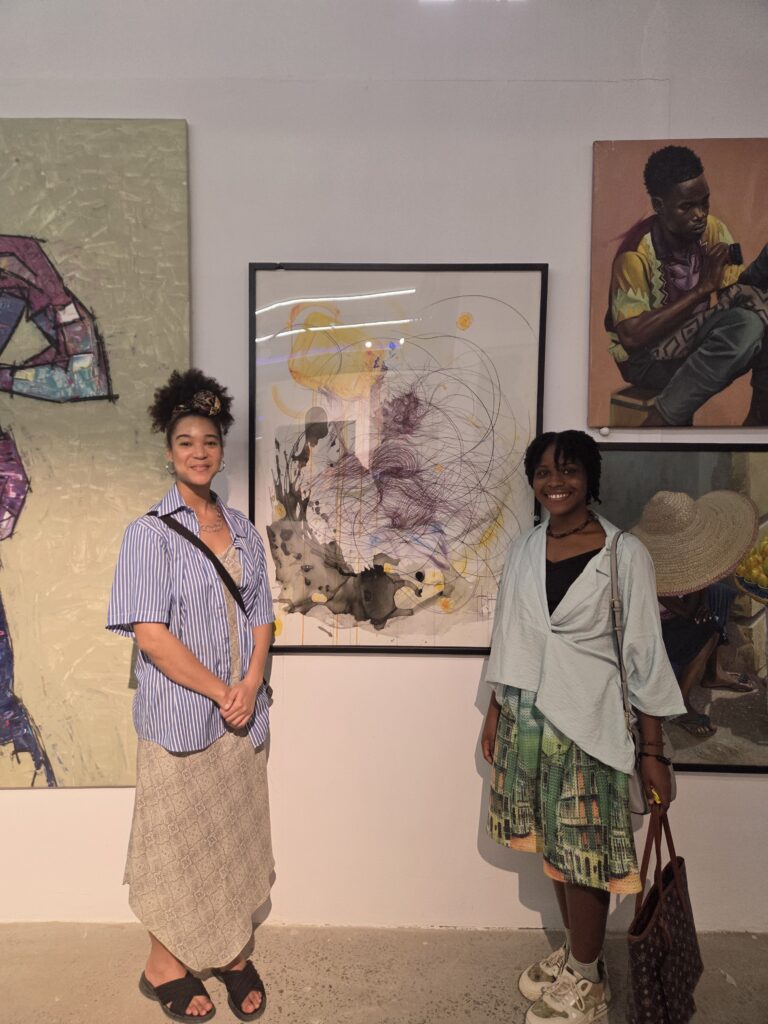
What kind of support during the residency was most meaningful to you?
There were several things. It was only my third time in the country, so the fact that Angels and Muse gave me a place to stay was already a huge gift. Then the coordinator Francis was so involved in my research and truly worked alongside me on these questions, which was incredible. And finally, I met several people before and during my stay, sometimes through interviews, who welcomed me in my Igbo identity and supported my work in different ways : by asking me challenging questions that helped move my research forward, by pointing me toward other experts on the subject, or by sharing historical and spiritual knowledge. The environment that Angels and Muse created made all of that possible.
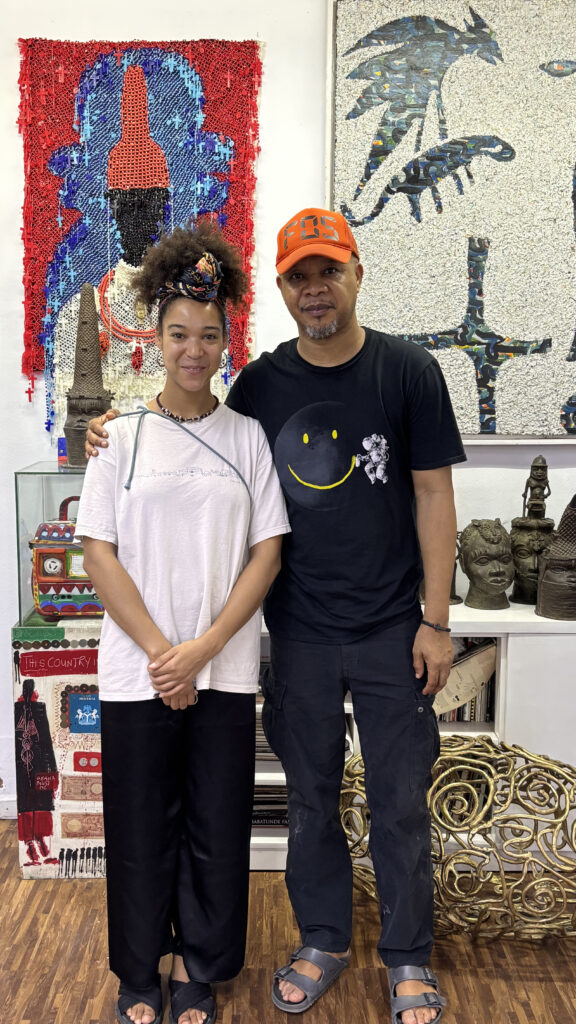
Were there any local materials, histories, or conversations that found their way into your work?
I have not yet started writing the screenplay ; I need to come back to Nigeria for a residency to do that. However, here in Belgium, I just finished another residency for a theater show, and I am currently integrating the concept of Ọfọ into a rewriting of a Greek mythology. So far, in the musical research I did with musicians Daud Rosciglione and Diego Marchant, we included a nursery rhyme in Igbo, taken from a recording I made of my biological father. I think recorded voice material will be valuable across the different forms of my work, whether theater or film.
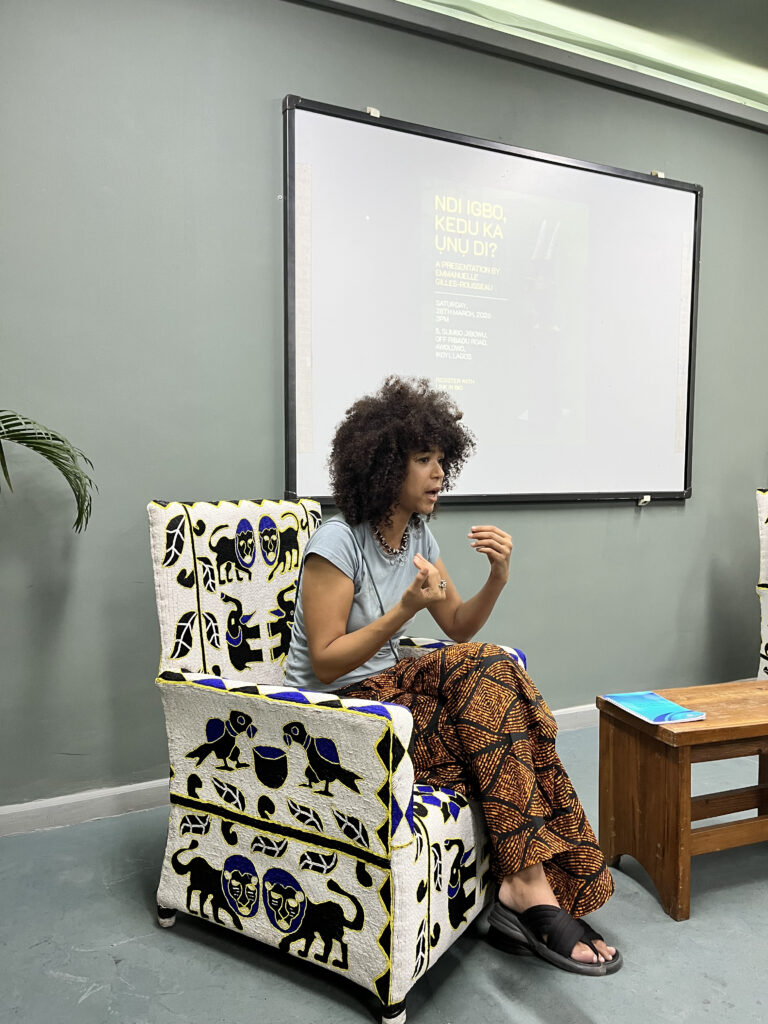
What is currently inspiring your thinking or practice?
Definitely Octavia Butler with her dystopian trilogy Lilith’s Brood, and Things Fall Apart by Chinua Achebe. These are foundational texts in decolonial art, but I am only discovering them now. They inspire me in how to create decolonial and intersectional fiction that goes beyond simply being anti-racist. I’m also very influenced by people like Olivier Marboeuf and Louisa Yousfi, who encourage the creation of fictional narratives where things that don’t exist in our world do, rather than simply talking about what’s wrong. I like this way of thinking that focuses on hope and organization rather than fear.