
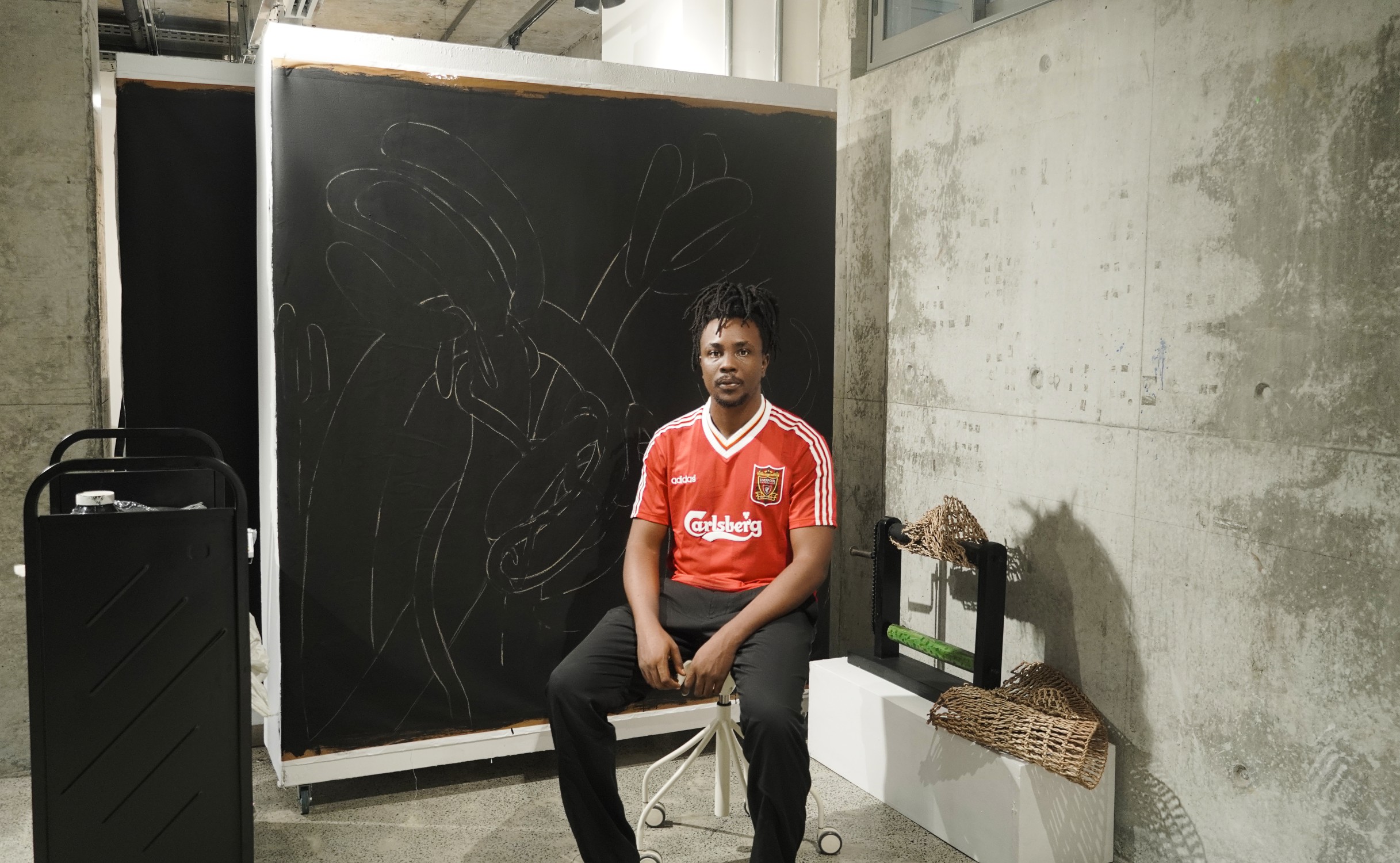
Can you tell us about the project you were developing?
I developed multiple projects during my time at GAS. One of them was Cactuses. In Nigerian geography and topography, cactuses are the most dominant and enduring type of horticulture we have because we really suck at maintenance.
I’m looking at it as something synonymous with being Nigerian. Cactuses thrive in places that are supposed to kill them, and they are growers. That speaks to Nigerians. We are resourceful people. When something comes up, there’s always a way we try to bypass it. That is also a problem with us sometimes. That adaptability is the symbolism of cactuses. I’ve been building a world around it, from light sculptures to benches, to textiles, and public opinion sculptures that are almost like libraries of people’s opinions where they design envelopes and cards reacting to ecological issues.
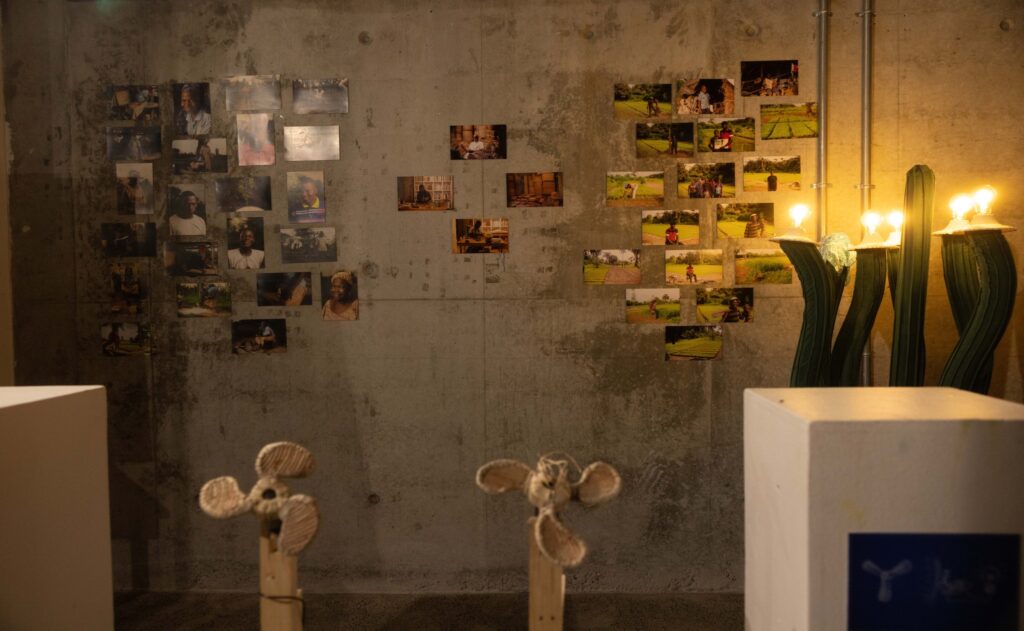
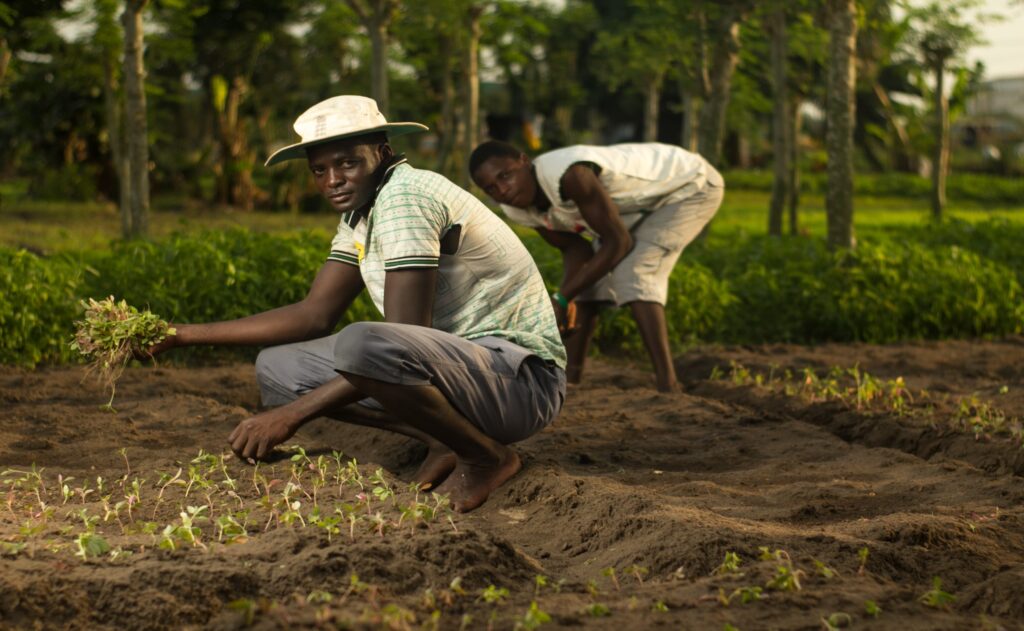
Another project I worked on is called Food to Power. Food to Power utilizes ewedu (jute) stalks. We were trying to see how it could be reused in a way that empowers citizens. The project started eight years ago when I was fresh out of university. I was around Igando Market looking for stories to tell. Behind LASU gate there is a whole community farm stretching down to the market. Most of what they sell there is grown on that roadside.
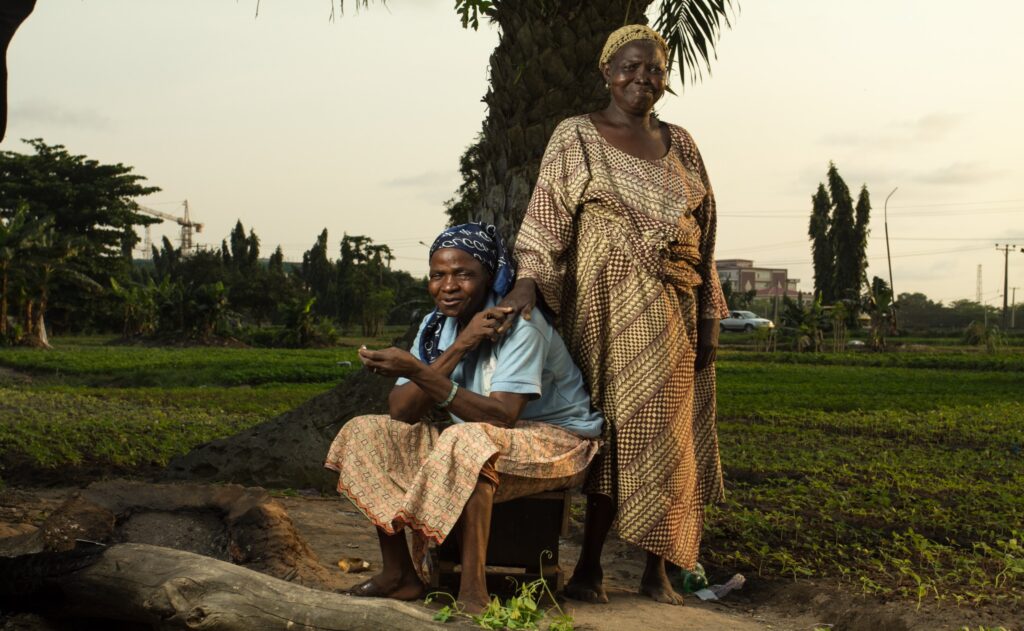
I found the Ogani family there. Theresa Ogani, the matriarch, was a devout Catholic. I photographed her, her children and her grandchildren. She used to say that God knew what He was doing when He made the Garden of Eden before He made human beings because food is essential and farmers need to be dignified. She also said the first human beings were tenders of the garden of eden. I found that fascinating.
I photographed them. Eight years later, I went looking for her again for this program and found out the farm had been overrun by housing. I found that the family had moved and Mama Teresa had died a couple of years before I returned.
I eventually tracked the family to Badagry. They still had the family farm there. This time, the patriarch of the Ogani family was present because after Teresa died, he moved from Cross River to stay with his children and grandchildren in Lagos. I recreated photographs I had taken eight years earlier.
One of the boys I photographed as a child was now much older, standing with a bigger stick in the same pose. I then asked them what they would love for their farm, and they said they wanted to be able to farm at night. That brought about the Food to Power project. We weaved jute into wind propellers and created a turbine lamp prototype that was cheap and practical.
The community project was called One Bulb at a Time, which was held at G.A.S We invited design students from UNILAG, 2nd generation weavers, the Ogani family, and an agro-technologist from the United States. We held seminars showing how innovation like this could be distributed and accessible. Farmers don’t have to belong to the formal sector to access innovation that simplifies their work, preserves their livelihoods, and potentially helps them gather data for farming in the future.
Your work feels multidisciplinary and deeply rooted in community and nature. How did the residency help bring all these things together?
I had already been making works about cactuses before the residency, but this gave me a way to institutionalize that aspect of my practice. The G.A.S residency allowed me to fully explore that with funding that helped me bring communities together and buy technical mechanisms for the work. I’ve always invested heavily in my own art practice, but this residency felt like finally having breathing space. Sometimes you carry plans for years and just wait for the right time. This residency came at exactly the right moment.
One thing G.A.S has in abundance is books. I read a lot there. I had access to archival books and rare editions that aren’t available to everyone. I was able to study artists interdisciplinarily and think deeply about how true and lasting community work can happen.
I also loved the fact that I wasn’t in my own studio. Your studio can be noisy because you’re constantly trying to survive and keep things moving. You see unfinished works everywhere and remember everything you still need to do. At G.A.S, there were no expectations to produce anything immediately. It was simply a place to develop ideas and aspects of your work. For me, it felt like a sanctuary. I think my mind needed that kind of space.
Is there any book, film, or resource inspiring you at the moment?
For me, it’s not a place. It’s an interview. One of the building blocks of my mind is the 2012 Stanford address by Steve Jobs. You only understand the past in the future. I revisit it constantly because every time I listen to it, there’s something new to take from it.
One of the things that fascinated me was how typography became one of the things that gave Apple an edge. People say Steve Jobs dropped out of Stanford, but before leaving, he attended a lettering class, and that shaped how he later approached design. That story taught me that you do not have to follow what everybody else is doing. The peculiarity of your work and the handwriting of your work matter.